
Saddle Fitting by Lauren Pryor MSFC
As a qualified saddle fitter with over a decade of experience, I specialise in solving saddle fitting challenges for competition horse owners.
My journey began with my own jumping horse. I struggled to find a saddle that truly fit and I grew frustrated with fitters who only had limited stock and pushed unsuitable options. That experience drove me to become the saddle fitter I wish I’d had.
Now, I work collaboratively with vets, trainers and other equine professionals to ensure you get the best results. Helping riders including those competing for Team GB, achieve peak performance. By optimising saddle fit, I help prevent discomfort, improve biomechanics, and enhance the partnership between horse and rider so you can perform at your best.
A well-fitted saddle can transform your riding, improving your horse’s comfort, movement, and overall performance. Book a saddle fitting appointment today, and let’s find the perfect solution to help you and your horse perform at your best.
Saddle Fitting FAQs: Your Questions Answered
-
How do I know if my saddle doesn't fit my horse?
There are several telltale signs that your saddle may not be fitting correctly. Watch for new white hairs or abnormal dry patches on your horse's back, which could indicate pressure points. You might notice your horse is reluctant to move forward, pins his ears back when being tacked up, or becomes difficult to mount. From a rider's perspective, if you find yourself constantly tipping forward or backward, or if you struggle to maintain your position over jumps, your saddle may be negatively impacting your position. After 12 years of fitting saddles for competitive riders, I've seen how even subtle fit issues can impact a horse's willingness to jump and overall performance. If you're experiencing any of these signs, a professional saddle fitting assessment can identify the problem and find the right solution for both you and your horse.
-
What are the most common saddle fitting problems?
The most frequent issues I see are: 1. Saddle too narrow or too wide for the horse's back – This is the number one problem. A too-narrow saddle pinches the horse and restricts movement, while a too-wide saddle may sit too low and will create pressure pressure points. 2. Incorrect tree shape – If the tree shape doesn't match your horse's back shape, the saddle will either bridge (only touching at front and back) or rock (touching only in the middle). 3. Saddle slipping forward – This restricts shoulder movement and is particularly problematic for showjumping horses who need full freedom through the shoulder. 4. Unbalanced saddle – A saddle that tips forward or backward affects both rider position and weight distribution on the horse's back. 5. Changes in horse's shape – Horses change shape with fitness, age, and training. A saddle that fit perfectly last season might not fit now, especially if your horse has developed more muscle. For competitive riders, these fit issues don't just cause discomfort, they directly impact performance. A horse that can't use his back properly will struggle with collection, jump technique, and overall athleticism.
-
How often should I have my saddle fit checked?
I recommend having your saddle fit assessed at least twice a year, ideally in spring and Autumn. However, there are situations where more frequent checks are necessary: Young horses in training – Check every 3-4 months as they develop muscle and change shape Horses returning from injury or time off – Muscle loss or changes in fitness level affect saddle fit After significant weight gain or loss – Whether your horse has been on box rest or has come back from summer turnout When you notice performance changes – If your horse starts refusing jumps, becomes resistant, or shows behavioural changes Many riders don't realise that a horse's back shape changes throughout the year based on workload and fitness. A saddle that fits perfectly in peak competition season might be too wide when your horse has less muscle. As part of our service, we can advise you on the optimal checking schedule based on your horse's age, competition level, and training program.
-
What happens during a professional saddle fitting appointment?
A thorough saddle fitting appointment with Polished Saddles typically takes 60-90 minutes and involves several key stages: 1. Horse evaluation – I assess your horse's conformation, back shape, muscle development, and any asymmetries. I'll also watch your horse move to understand his natural way of going. 2. Assessment of your current saddle – I'll evaluate how your existing saddle fits (or doesn't fit) and identify specific problem areas. This helps us understand what's working and what needs to change. 3. Rider assessment – Your position, riding style, and discipline matter. A saddle for a showjumping rider needs different balance and support than one for dressage or eventing. 4. Saddle selection and trial – Based on the assessment, I'll recommend specific saddles from our range of Equipe, Prestige, and Amerigo options. We'll try multiple saddles to find the best match. 5. Dynamic fitting – You'll ride in the saddle so we can assess fit in motion. This is crucial. A saddle might look perfect when static but behave differently when the horse is moving. 6. Final adjustments and education – I'll explain what makes this saddle the right choice and show you what to look out for between professional assessments.
-
Can I assess saddle fit myself, or do I need a professional?
You can definitely do basic saddle fit checks yourself, and I encourage all riders to develop this skill. Here's what you can check: Place the saddle on your horse's back without a pad. You should be able to see clear daylight along the entire spine. The saddle should sit level, not tipping forward or backward Check that the saddle doesn't extend beyond the last rib (T18) Watch for any behavioral changes when tacking up or riding However, a professional fitting is essential when: Purchasing a new saddle (whether new or used) Your horse shows signs of discomfort or performance issues Your horse has changed shape significantly You're not sure if the saddle is the cause of riding problems The challenge with self-assessment is that subtle fit issues aren't always obvious to the untrained eye. After 12 years of fitting saddles for competitive riders, I can spot problems that might not be immediately apparent like a tree that's slightly too tight on one side, or a saddle that will cause problems as your horse develops more muscle. Think of it like servicing your car: you can check the oil and tire pressure yourself, but you still need a professional service to catch the issues you can't see.
-
Why does my saddle slip forward when I'm jumping?
A saddle that slides forward during jumping is one of the most common complaints I hear from showjumping riders, and it's usually caused by one of these issues: 1. Forward girth groove – Some horses very forward girth grooves that don't align well with the girthing options on your saddle. When this happens a saddle will normally be pulled forward by the girth. 2. Incorrect saddle balance – If the saddle is tipping forward or backwards its stability is already compromised making slipping in any direction more likely. 3. Horse's shape has changed – Your horse may have lost muscle through the back or gained muscle through the shoulder, changing how the saddle sits. The quick fix many riders try, over-tightening the girth or using a sticky gel pad, doesn't address the root cause. While these can help manage the symptom, they don't solve the underlying fit problem. A properly fitted saddle should stay in place. For jumping horses specifically, the saddle needs to allow complete freedom through the shoulder while maintaining stability. If your saddle is slipping forward, I'd recommend a fitting assessment to identify the specific cause and find a saddle that stays put, allowing both you and your horse to perform at your best.
-
What's the difference between saddle fitting and saddle flocking?
These are related but different services, and understanding the distinction helps you know what your horse needs: Saddle Fitting is the comprehensive process of assessing whether a saddle is the right shape, size, and style for your horse and riding discipline. It involves: Evaluating your horse's conformation and back shape Selecting the correct saddle tree width and angle Ensuring proper balance and position Matching the saddle to your riding style and discipline Saddle Flocking (also called re-flocking or panel adjustment) is the process of adjusting or replacing the wool stuffing inside the saddle panels to fine-tune the fit. It's a maintenance service that: Corrects minor fit issues in an otherwise suitable saddle Compensates for changes in your horse's muscle development Addresses uneven panel pressure Restores proper balance to a saddle that has settled over time Here's the key difference: Flocking can only do so much. If the saddle tree itself is the wrong width or angle for your horse, no amount of flocking adjustment will make it fit correctly. It's like trying to make a size 10 shoe fit a size 8 foot by adding insoles, it might help slightly, but it's not the right solution. During a fitting appointment, I'll assess whether your current saddle just needs flocking adjustment or whether you need a different saddle entirely. Many riders are relieved to learn that sometimes a flocking adjustment is all that's needed, especially if their horse has changed shape slightly but the saddle tree is still appropriate. For our saddles at Polished Saddles, we ensure proper flocking as part of the fitting process, and we can advise on when future adjustments might be needed based on your horse's development.
-
How much does a professional saddle fitting cost?
At Polished Saddles, we want to make professional saddle fitting accessible to riders who are serious about their horse's comfort and performance. It also reflects the many years of training undertaken and hands on experience we have in solving saddle fitting problems for some of the UK's top riders. When purchasing a new or used saddle from Polished Saddles: We recommend a comprehensive fitting appointment Selection from our range of Equipe, Prestige, and Amerigo saddles - as well as a small number from other select brands. 5-day trial period to ensure the saddle works for both you and your horse Follow-up support and fit checks For riders who already own a saddle and need a fit assessment: We can provide standalone fitting consultations, please contact us for current pricing and availability. Investment perspective: While saddle prices generally range from £1,500 for quality used saddles to £5,000 for top-of-the-range new models, the fitting service ensures you're making the right investment. A poorly fitted £5,000 saddle is worth less than a properly fitted £2,000 saddle in terms of performance and your horse's wellbeing. We also offer part exchange on your current saddle and can help you sell your existing saddle, which helps manage the investment in a new (to you), properly fitted saddle. For riders concerned about cost, we can discuss payment options to spread the investment.
-
Can saddle fit affect my horse's jumping performance?
Absolutely, and this is something I see constantly with the competitive showjumping and eventing riders I work with. Saddle fit has a direct impact on your horse's ability and willingness to jump. Here's how poor saddle fit affects jumping performance: Physical limitations: Restricted shoulder movement – A saddle that's too far forward or too narrow through the tree pinches the shoulders, preventing your horse from fully extending his front legs over the jump. This can cause rails down and awkward jumping style. Back pain and tension – Pressure points or an unbalanced saddle cause your horse to hollow his back to avoid discomfort, making it impossible to use his back properly over fences (bascule). Reduced power from hindquarters – If your horse can't engage his back, he can't transfer power from his hindquarters effectively, resulting in flat or weak jumps. Behavioural changes: Refusing jumps (especially after jumping well previously) Rushing at fences to "get it over with" Stopping or running out at the last moment Bucking or showing resistance when jumping Pinning ears back or showing signs of anticipating discomfort Rider position problems: An ill-fitting saddle also affects your position. If you're constantly fighting to stay balanced or the saddle tips you forward, you can't support your horse properly through the jump. This creates a cycle where both horse and rider are compromised. The good news: When we correct saddle fit issues, riders often report immediate improvements. Horses that were refusing can jump confidently again. Horses that were tense, relax and use their backs properly. Rails that were coming down start staying up. Having a saddle that actively supports, rather than hinders, jumping performance is essential. This is why we specialise in fitting saddles for competitive riders who want every advantage when they're in the ring. If your horse has developed jumping issues and you've ruled out pain, training, and veterinary problems, saddle fit should be your next investigation.
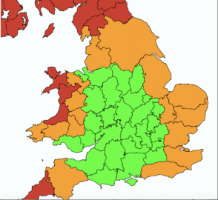
Saddle Fitting Coverage
We cover a very large area for saddle fitting appointments. Green areas on the map are covered by our services. If you are in an orange area please contact us with your postcode and we will confirm our availability. Unfortunately we do not currently offer fitting services in the red areas.
New and Used Saddles Available For Saddle Fittings